
A lot of young artists finish their first song and then get stuck. The recording is done, everyone’s excited… and then comes the big question: what do we do with it now?
Here’s the truth—today you don’t need to be 18, signed, or famous to release music. Artists as young as 11, 12, and 13 are putting songs on Spotify and building real audiences. It’s happening every day.
Once a song is finished, the next move is getting it onto streaming platforms so people can actually hear it. That usually means using a distributor, with a parent or guardian helping if the artist is under 18. The process is a lot simpler than most people think.
But here’s where things get interesting, releasing the song is only half the story. The artists who start getting attention are the ones who share the journey. Posting a short clip, singing a verse on video, talking about the story behind the song… those little things are what get people paying attention.
And it doesn’t all happen online. Some of the biggest confidence boosts and opportunities come locally. School talent shows, town events, charity functions, small festivals, community events—even just performing in front of friends and family—those moments matter. That’s where artists get comfortable performing and start hearing real reactions from real people.
Another thing smart young artists do is keep the content going. One song can turn into acoustic versions, rehearsal clips, live performances, covers, and behind-the-scenes videos. The artists who grow are usually the ones who stay active, not the ones who post once and disappear.
And if anyone thinks it’s too early to start, look at the examples. Taylor Swift started writing songs around age 10 and was already performing and building experience years before most people even knew her name. By 14, she was already releasing music and taking major steps in her career.
Billie Eilish was also a teenager when she started releasing songs online, building momentum long before the world caught up.
And artists like Nandi Bushell show how powerful simply posting and performing consistently can be. She started sharing videos young and built a worldwide audience just by putting her talent out there.
That’s the real lesson—momentum doesn’t come from one big moment. It comes from showing up again and again.
For young artists, the goal isn’t going viral overnight. It’s getting better, getting more confident, and learning how the music world works one step at a time. The artists who start young often have a huge advantage later, because by the time others are starting, they already have experience.
Finishing a song is exciting. But putting it out, performing it, and sharing it with people—that’s where things really start to happen.

If you’re paying attention to what younger teens are actually interested in right now, it’s pretty clear that music is winning.
More and more kids are skipping the traditional routes like modeling agencies or local theatre programs and instead putting their energy into making songs, learning production, and building small fanbases online. For a lot of them, the goal isn’t Broadway or runway shows anymore — it’s Spotify, TikTok, and YouTube.
Music feels more accessible than ever. You don’t need to live in a big city, have industry connections, or even leave your bedroom to start. With a laptop, a mic, and some basic software, teens can write, record, and release their own tracks without waiting for permission from anyone. That alone makes it way more appealing than auditions, castings, and contracts.
There’s also more control. In music, kids get to shape their own image, sound, and identity. They’re not just playing a role or being styled by someone else, they’re telling their own stories. That’s a big shift from modeling and theatre, where most decisions are still made by agents, directors, or brands.
Social media plays a huge part too. When teens see artists their own age blowing up from a single song or a few viral clips, it feels realistic. They can watch the entire journey in real time, not just the polished end result. It makes music feel like something you can actually grow into, not just dream about.
The vibe is different now. Theatre and modeling used to feel like the main creative paths. Today, music feels more personal, more flexible, and more aligned with how young people already live online. For this generation, being an artist doesn’t mean fitting into a system — it means building something from scratch and seeing where it goes.
Written by Dean Cramer via Kings of A&R

For most artists, getting a message from a record label feels like winning the lottery. Years of grinding, uploading music, chasing playlists, building a following — and finally, someone from “the industry” wants to talk. The problem is, that moment of validation is exactly what labels rely on to push artists into deals that benefit the label far more than the artist.
The truth is, labels rarely sign artists because they believe in “art.” They sign artists because they see leverage. Data, momentum, audience, image, marketability. If you’re being approached, it usually means you’ve already done the hardest part: building something on your own. Ironically, that’s often when a bad deal becomes the most dangerous.
Most modern label deals are structured around ownership and control. The label offers an advance, which sounds like free money, but is really just a loan you have to pay back from your future earnings. Then they take a large percentage of your masters, your publishing, sometimes even your brand, merch, touring, and image. You’re essentially financing your own career while giving up the rights to it.
The biggest trick is urgency. “We need an answer by Friday.” “This opportunity won’t be here long.” “Other artists are interested.” Labels know that scarcity creates emotional decisions. Artists start thinking in terms of being chosen instead of being strategic. They stop asking the most important question: What am I actually giving up, and for what?
Another common tactic is the illusion of support. Labels promise marketing, playlisting, radio, PR, connections, and “the machine.” In reality, most artists on labels get minimal attention unless they’re already performing. If your first release doesn’t hit, you’re often quietly deprioritized while still locked into a multi-year contract you can’t escape.
What artists rarely realize is that in 2026, labels need artists more than artists need labels. Distribution is cheap. Marketing can be outsourced. Fans are built on TikTok, Instagram, YouTube, Spotify, and email lists — not through label offices. Many artists today are doing millions of streams independently, keeping ownership, data, and long-term income.
The smartest artists don’t ask, “How do I get signed?” They ask, “What does this deal give me that I can’t already build myself?” If the answer is vague — exposure, credibility, industry access — it’s usually not worth giving up your masters for the next 10 to 20 years.
A good deal should feel boring on paper. Clear splits. Short term. You keep ownership. You can leave. You understand exactly how money flows. If you can’t explain your own contract in simple language, it’s probably not in your favor.
The real flex in today’s music industry isn’t getting signed. It’s having leverage. It’s owning your catalog. It’s being able to say no. Labels aren’t evil, but they are businesses, and their job is to acquire assets at the lowest cost possible. Your job as an artist is to realize that you are the asset.
The moment you stop chasing validation from the industry is usually the moment the industry starts chasing you. And that’s the only position where a deal ever makes sense.
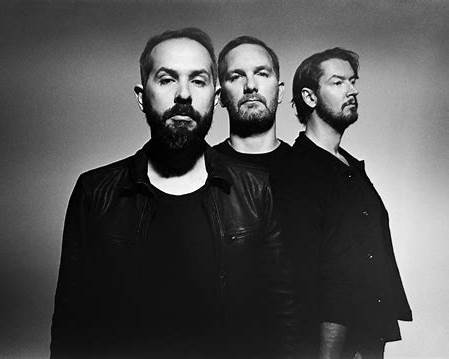
The music industry has a strange way of working. Some artists rack up millions of streams, sell out tours, and build massive fanbases — yet still fly completely under the mainstream radar. While everyone argues about Taylor Swift, Drake, and Bad Bunny, a whole parallel universe of “quietly huge” artists is thriving online.
Here are five popular artists you’ve probably never heard of, even though their numbers say otherwise.
Still Woozy
Genre: Indie Pop / Alt R&B
Still Woozy (real name Sven Gamsky) is one of the most streamed indie artists in the world, yet most casual listeners couldn’t name a single song. His sound blends bedroom pop, funk, and psychedelic soul — catchy enough for TikTok, chill enough for coffee shops.
Tracks like “Goodie Bag” and “Habit” have quietly become modern indie anthems, pulling in hundreds of millions of streams without ever breaking into traditional pop radio.
He’s proof that you can be stadium-level popular without being a household name.
Laufey
Genre: Jazz Pop / Indie
Laufey makes music that sounds like it came from a 1950s jazz lounge, but her audience is almost entirely Gen-Z. Her songs blend orchestral arrangements, soft vocals, and nostalgic songwriting that feels completely out of place in today’s hyper-digital music world — in the best way.
Despite that, she consistently sells out major venues and racks up hundreds of millions of streams. She’s one of the rare artists reviving jazz-influenced pop for a new generation.
TV Girl
Genre: Indie Pop / Lo-Fi
TV Girl feels like a cult band, but their numbers tell a different story. Songs like “Lovers Rock” and “Not Allowed” have become TikTok staples, generating massive daily streaming traffic.
Their retro sampling, spoken-word hooks, and dreamy production have created a fanbase that treats the band like a secret — even though they’re pulling in millions of listeners every month.
They’re “internet famous” in the purest sense.
Cigarettes After Sex
Genre: Dream Pop
Cigarettes After Sex might be the most extreme example of “famous but unknown.” Their music is slow, atmospheric, and intimate — the opposite of what you’d expect from a band with billions of streams.
They sell out theaters across Europe, Asia, and the U.S., yet most people couldn’t recognize the name. Their success comes almost entirely from streaming algorithms and playlist culture.
No scandals. No viral gimmicks. Just pure, algorithm-powered fame.
Men I Trust
Genre: Indie Pop / Dream Pop
Men I Trust built a massive global following with soft, minimal, dreamy pop that feels tailor-made for late-night drives and headphone listening.
They’ve accumulated billions of streams, headline international tours, and maintain a fiercely loyal fanbase — all while staying almost completely outside mainstream music media.
They’re a perfect example of how “chill” music now dominates streaming culture.
The new kind of popular is different. These artists didn’t come up through radio, labels, or celebrity culture. They came up through playlists, TikTok clips, YouTube recommendations, and streaming algorithms.
In today’s music industry, you no longer need to be “famous” to be successful. You just need to live inside people’s headphones.
And that’s created a whole generation of artists who are quietly bigger than most mainstream stars — even if you’ve never heard their names.
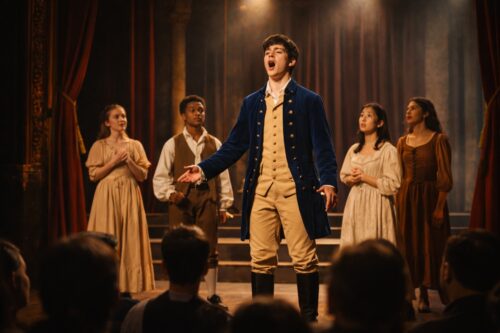
For a long time, theatre was the default path for creative kids. Drama club, school plays, musical theatre programs, summer camps, auditions. If your child liked performing, that was the lane. Get on stage, learn your lines, sing the songs, hope you get cast.
But something has been changing.
More and more parents are starting to look at music instead of theatre as the main creative path for their kids. Not because theatre is bad, but because the world around it has changed.
Theatre, at its core, is about performance. You’re stepping into someone else’s story. Someone else wrote the script. Someone else directs the show. Someone else decides who gets the role. Even if you’re talented, you’re still waiting to be chosen.
Music works in the opposite direction. It’s about creation first. You write the song. You shape the sound. You build the identity. Instead of asking for permission, you’re making something that belongs to you.
That difference might sound subtle, but in today’s world, it’s huge.
Parents aren’t just thinking about talent anymore. They’re thinking about time, money, and long-term opportunity. Theatre takes a lot of investment. Years of classes, expensive programs, constant auditions, and a career path where only a very small percentage of people ever make a real living from it.
Music feels different. Vocal training, songwriting, and production skills don’t disappear after one show. They stack. Every song becomes an asset. Every recording is something you can release, improve, or build on.
From a parent’s point of view, theatre can start to feel like chasing roles, while music feels like building something.
What’s interesting is that schools still push theatre very hard. It fits perfectly into the education system. Group activities, school productions, showcases for parents. It makes sense inside a classroom.
But the real entertainment industry doesn’t run on school systems anymore. It runs on streaming, social media, independent releases, and digital platforms. The biggest opportunities today come from original content, not auditions.
That’s why so many families are slowly shifting away from school-based theatre programs and toward private vocal coaching, songwriting, and artist development. They’re following where the real market is.
And the shift is starting younger than ever.
A ten-year-old today can already do things that were basically impossible when most parents were growing up. They can start vocal lessons and learn how their voice actually works. They can write simple songs instead of just memorizing lines. They can record at home. They can post covers or original music online. They can learn piano or guitar and understand how songs are built from the inside.
At that age, it’s not about being famous. It’s about learning how to create.
By the time that same kid is fifteen or sixteen, they’re not just “trying it out.” They already have years of experience, a catalog of songs, and usually some kind of audience. That kind of head start doesn’t really exist in theatre, where every audition is a reset and every role depends on someone else’s decision.
Theatre has one main path. You audition, you get cast, you perform, and then you start over.
Music has dozens of paths, and they can all happen at the same time. An artist can be writing, recording, releasing, building an audience, performing live, and even licensing music all at once. There’s no single gate and no one moment where someone tells you you’re allowed to begin.
That’s also why the definition of “artist” has changed.
The modern artist isn’t just a performer anymore. They’re a brand. They’re a content creator. They’re a business. They own intellectual property. They think about audience, identity, and long-term value, not just the next show.
Theatre teaches you how to perform.
Music teaches you how to create, build, and own.
This shift isn’t about theatre versus music. It’s about which path actually matches the world we live in now.
The future belongs to artists who own their work, control their audience, and build something they can grow over time. Artists who think like creators instead of applicants.
That’s why more parents are moving their kids toward vocal training, songwriting, and artist development. Not because theatre is disappearing, but because music offers something theatre simply can’t in today’s industry.
Freedom. Scalability. And real creative ownership.
In a digital world, the artist who creates the song holds more power than the artist waiting to be cast in one.
written by Dean Cramer via Kings of A&R
 Newsletter