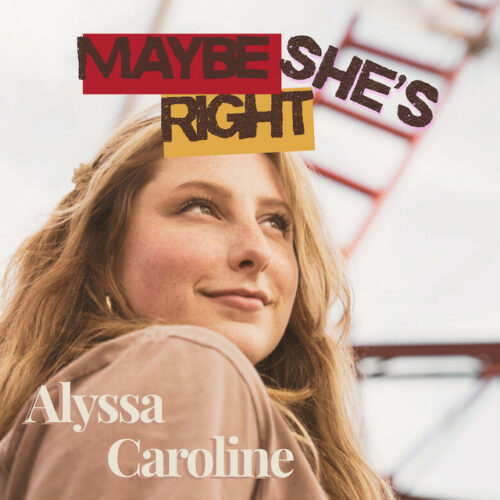
Alyssa Caroline has a way of turning quiet moments into songs that stay with you. Her latest release, “Maybe She’s Right,” captures the emotional aftermath of heartbreak while gently pointing toward self-realization. It’s honest pop storytelling that feels intimate, relatable, and timeless.
The response has been immediate. Within just a few days, the track surpassed 10,000 streams and helped push Alyssa past 30,000 monthly listeners on Spotify—an early sign that her audience is growing fast.
We caught up with Alyssa Caroline to talk about the story behind the song, the emotions that shaped it, and what this moment means as her momentum builds.
“Maybe She’s Right” sits in that uncomfortable space between heartbreak and self-realization. What moment sparked the song?
I was at a party during college with friends after a situationship ended. I was introduced to a girl who was talking to him, and the second I heard it, everything clicked. I realized I was never the problem, and I had tried so hard for someone who was never going to feel the same.
Later that night, he drove all the way from his hometown to meet her at the party. I didn’t want to feel anything when he arrived, so I got drunk. After that night, I realized how powerful that moment was and that it needed to be a song.
The song has picked up traction quickly. Why do you think it’s resonating right now?
I think it’s connecting because so many girls have experienced something like this. Putting everything into a relationship and not getting anything back is both devastating and frustrating. I think the song captures that feeling in a real way.
There’s a raw honesty in the track. How do you balance personal experience with leaving room for listeners?
I put a lot of my story into this song, probably more than I should have, but I wanted to capture exactly how I felt. I remember watching the sun come up in the back of his Jeep with my friends, wondering how I even got there. That imagery helps listeners step into the moment with me.
There’s a shift in the song from sadness to clarity. Was that part of your healing process?
Definitely. After that night, I knew I needed to move on and heal. Writing this song and others became a big part of that process. I’m excited to share more of that journey soon.
With this release gaining momentum, how is it shaping your next moves creatively?
This song opened up new lyrical doors for me. I feel like I can be more vulnerable in my storytelling, and that makes me even more excited to keep creating and releasing new music.
Follow Alyssa Caroline as she continues to build momentum and turn real-life moments into compelling pop records.
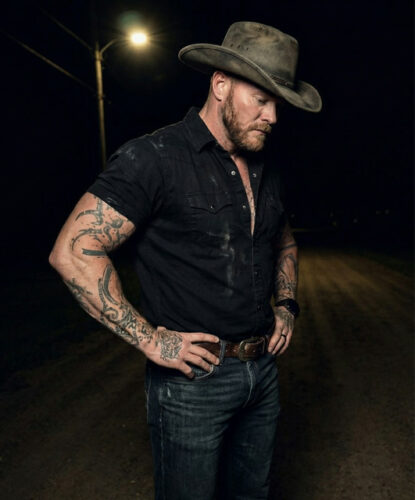
There’s a moment of clarity at the center of Kyle Neville’s “She’s My Religion”—and it’s what gives the song its weight.
Built from real-life reflection, the track leans into a simple but powerful idea: when life throws enough chaos your way—detours, setbacks, loss—you start to figure out what actually holds you steady. For Neville, that answer is love. Not in a surface-level way, but as something constant enough to believe in when everything else feels uncertain.
There’s a grounded, country-rooted honesty in how he delivers it. No overcomplication, no trying to dress it up—the strength of the song comes from how direct it is. His vocal carries that lived-in tone, the kind that feels more like a conversation than a performance.
“In a life full of detours, dead ends, grief, and failure, I realized the strongest belief I had was in our love. That’s when it struck me — true love can be more powerful than faith.”
— Kyle Neville
That quote isn’t just a hook—it’s the backbone of the record.
As an independent artist, Neville is clearly leaning into storytelling first. His catalog reflects real experiences—love, loss, growth—and “She’s My Religion” fits right into that lane. It’s the kind of song that doesn’t try to chase trends, which is exactly why it connects. There’s a sincerity here that cuts through.
From a placement standpoint, this sits naturally on playlists like Next From Nashville and Fresh Finds Country, with crossover potential into New Music Friday Country. There’s also a strong argument for mood-based lists—love-driven, reflective country tracks that lean more into storytelling than production.
Kyle Neville isn’t overthinking it—he’s just telling the truth. And in country music, that’s still what hits the hardest.

There’s something understated but quietly captivating about Ren Genevieve’s latest release, “Museum.” It doesn’t beg for attention—it earns it slowly.
The track feels like walking through a late-night gallery—intimate, reflective, and a little haunting. Her vocal sits front and center, soft but deliberate, pulling you into every line without ever overreaching. There’s a restraint here that works in her favor—nothing feels forced, nothing feels wasted.
Sonically, “Museum” leans into that dreamy indie-pop lane with subtle textures and clean production. Think somewhere between the emotional clarity of Aimee Mann and the modern, atmospheric polish you’d hear on today’s alt-pop records. It’s the kind of track that doesn’t hit all at once—but give it a second listen and it sticks.
Lyrically, she plays with memory and preservation—what we choose to hold onto, what we put on display, and what we quietly keep to ourselves. It’s personal without being heavy-handed, which is where the song really lands.
This fits naturally across playlists like Fresh Finds and The Scene, with crossover potential into New Music Friday given the right early traction. There’s also a strong case for sync—TV dramas, indie films, anything that leans into mood and introspection.
Ren Genevieve isn’t trying to overwhelm you here—she’s inviting you in. And that’s exactly why “Museum” works.
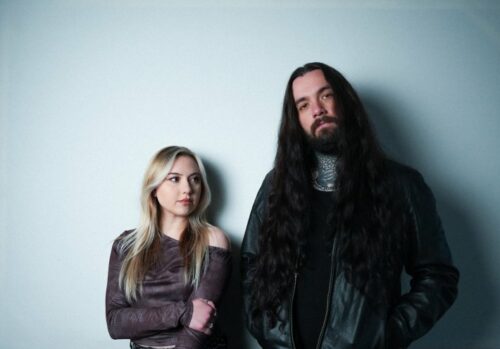
Some songs sit in heartbreak—others live in what comes after. On “Landmines,” Lauren Presley links up with alt-rock artist Letdown. for a collaboration that leans into that aftermath, where emotions don’t fade cleanly and memories linger longer than expected.
The pairing works because of contrast. Presley brings a sharp, controlled vulnerability, while Letdown. adds a rougher, more urgent edge. Together, it feels less like a duet and more like two perspectives colliding—each carrying their own version of the same story.
Rather than overcomplicating the production, “Landmines” keeps its focus on energy and movement, building just enough tension to keep listeners locked in without losing its replay value. It’s the kind of track that fits naturally into today’s alternative space—emotional, but still accessible.
With that crossover appeal, the single aligns well with playlists like New Music Friday, All New Rock, Fresh Finds Indie, The Rock List, Pop Punk’s Not Dead, and Alternative Beats, giving it strong potential across both alt-pop and rock audiences.
On the live side, Presley and Letdown. would sit comfortably on bills with artists like Maggie Lindemann, Royal & The Serpent, LØLØ, Stand Atlantic, and nothing,nowhere., where emotional intensity and genre-blending performances drive fan connection.
“Landmines” doesn’t try to do too much—it lands where it needs to, and that’s exactly what makes it stick.
Newcastle-based alternative rock outfit PØRTERS return with a striking new single, “Timewaster,” arriving at a defining moment for the band. Just days after its release, they’re set to take the stage at The Glasshouse International Centre for Music on March 18 as part of a BBC showcase—placing them among a curated group of rising acts gaining serious attention for their momentum and potential.
“Timewaster” continues to build on that trajectory, blending atmosphere and intensity in a way that feels both calculated and instinctive. The track opens with a subtle, almost hypnotic waltz rhythm, where pulsing percussion and airy vocals create a jazzy, off-kilter groove. But PØRTERS don’t sit in one lane for long—what begins as a slow sway quickly erupts into distorted indie rock energy, revealing a band that thrives on contrast and unpredictability.
Lyrically, the single takes aim at self-importance and noise—the kind of personalities that demand to be heard without saying much at all. Instead of dialing back, PØRTERS lean in, transforming that frustration into something explosive and danceable. It’s sharp, self-aware, and effortlessly replayable—the kind of track that feels instantly familiar while still carving out its own space.
With its crossover appeal, “Timewaster” fits seamlessly alongside playlists like Fresh Finds Indie, The Rock List, Indie Rock Roadtrip, All New Rock, New Music Friday, and Hot New Bands, positioning PØRTERS for strong discovery across both indie and alternative audiences. On the live side, their sound would translate naturally on bills with artists like Fontaines D.C., Inhaler, The Snuts, Sam Fender, and Nothing But Thieves, making them a strong contender for upcoming UK and European tour circuits.
“Timewaster” doesn’t just introduce PØRTERS—it cements them as a band with both identity and momentum, right as the spotlight starts to find them.
 Newsletter